Key Takeaways: When Each Water Strategy Fits
Summary: Choosing how to supply a newly formed settlement is rarely a simple ranking of options. WASH coordinators evaluate camp age, road access, and fuel availability during the initial site assessment to determine the immediate bridging strategy. Water trucking is usually a rapid bridging measure. On-site treatment becomes the optimal choice when a usable raw-water source, treatment equipment, trained operators, and security of supply are available.
The correct choice depends heavily on the environment. Teams must weigh source-water risk, population movement, and whether infrastructure can be protected from vandalism or conflict. Trucking can start before permanent systems are installed. It remains vulnerable to road disruption, contractor availability, fuel shortages, and queuing at distribution points.
The Emergency Camp Water Problem Is a Systems Problem
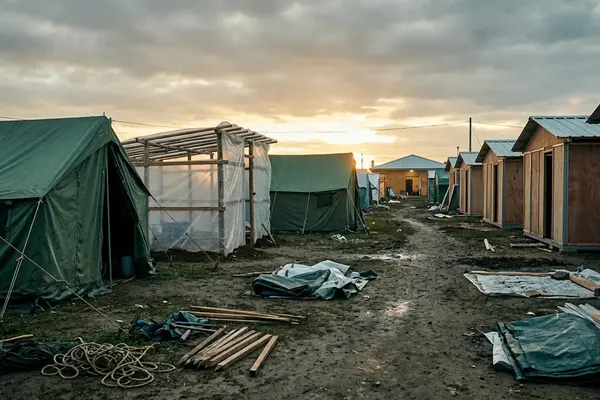
Emergency camp water supply is not only about finding water. It involves sourcing, transport, treatment, safe storage, distribution, household handling, surveillance, and repair capacity. Displaced households often arrive before the site layout is complete. Temporary shelters expand faster than pipework, drainage remains unfinished, and WASH teams must balance speed with safety.
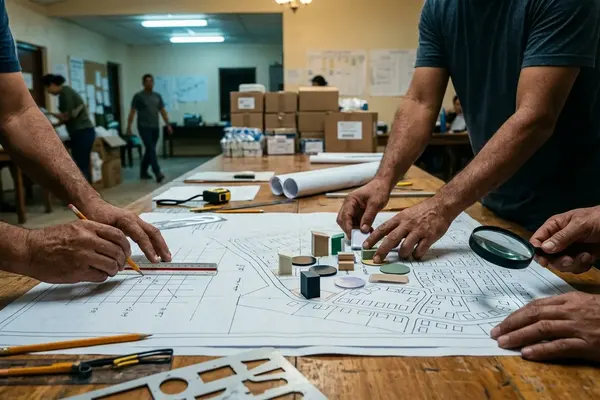
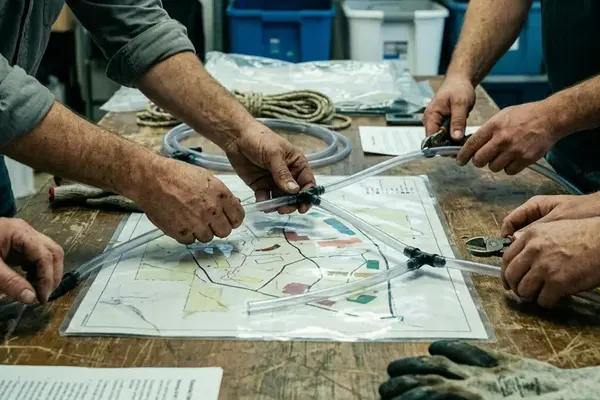
Field teams map potential failure points across the entire delivery chain—from source abstraction to household storage, before committing to a specific infrastructure path. This mapping happens under extreme pressure. Operations often require the simultaneous management of roughly 500 to 1,000 daily arrivals while laying initial distribution pipework.
Immediate lifesaving supply looks very different from service stabilization. Recognizing this distinction prepares responders to understand why two vastly different strategies may both be valid at different moments in a camp's lifecycle.
Water Trucking: Fast Deployment With High Logistics Exposure
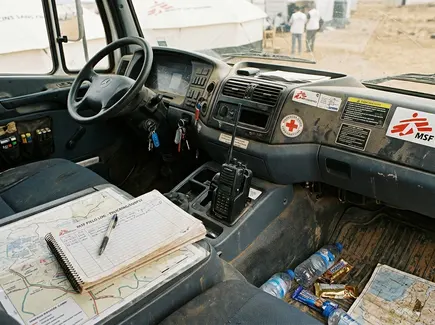
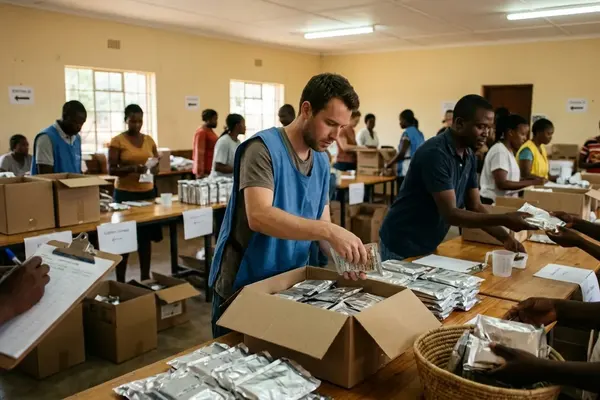
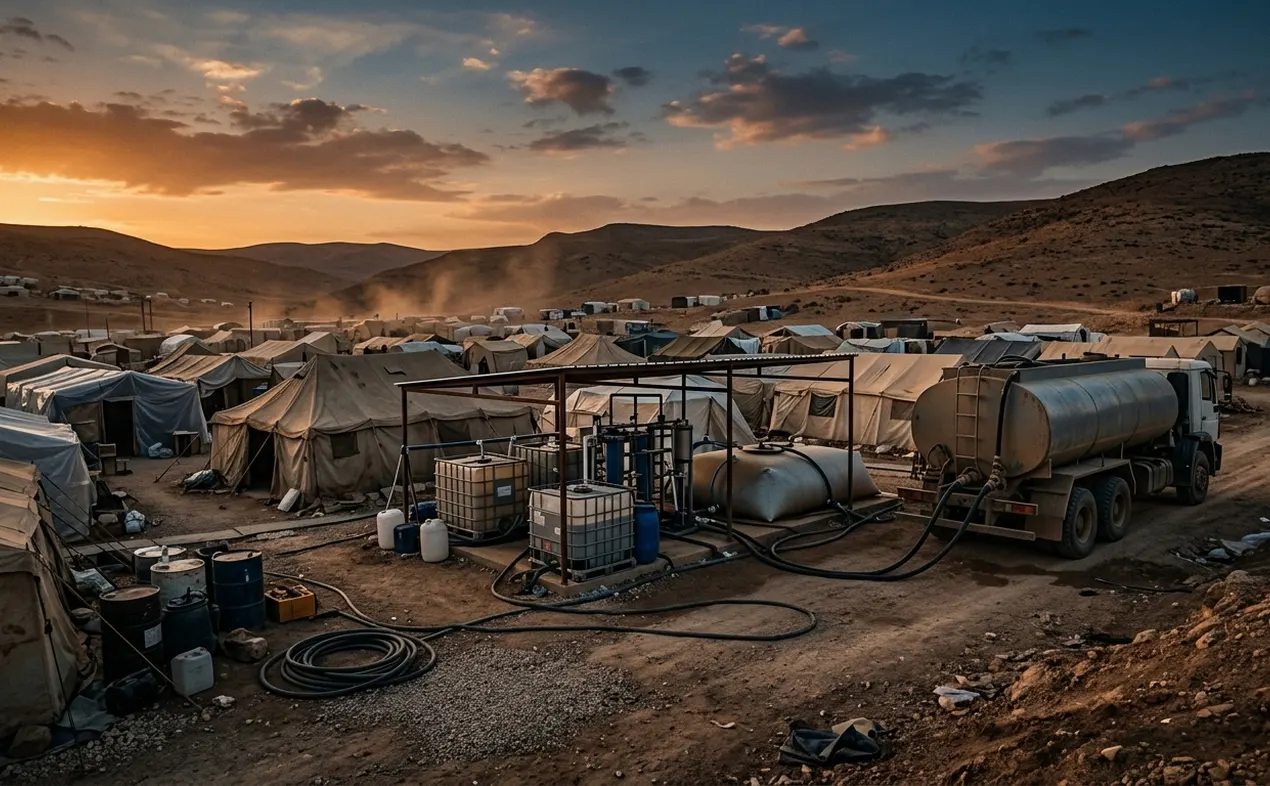
Water trucking relies on a precise, repetitive model. Water is collected from a borehole, municipal network, surface-water treatment point, or commercial supplier. It is transported by tanker, discharged into storage tanks or bladders, and then distributed through tapstands or controlled filling points.
This approach performs exceptionally well during the first days of an emergency. It is the proven choice for dry or unprepared sites, damaged infrastructure, or while boreholes and treatment units are being installed. Program evaluation revealed that deployment within the first 48 to 72 hours of a sudden population influx relies almost entirely on this method.
Logisticians establish contracts with local tanker operators, prioritizing rapid deployment while establishing strict discharge protocols at camp storage bladders. These operations typically require tankers in the 5,000 to 15,000-liter capacity range. Depending on road conditions, these fleets operate on 45 to 90-minute turnaround cycles.
The operational dependencies are vast. Success requires reliable tanker contracts, clear road access, steady fuel supply, and water-point permissions. Teams must actively manage loading times, discharge fittings, storage capacity, and traffic management. Contamination during hose handling at discharge points remains a constant threat if supervision lapses.
On-Site Treatment: Slower to Start, Stronger When Controlled
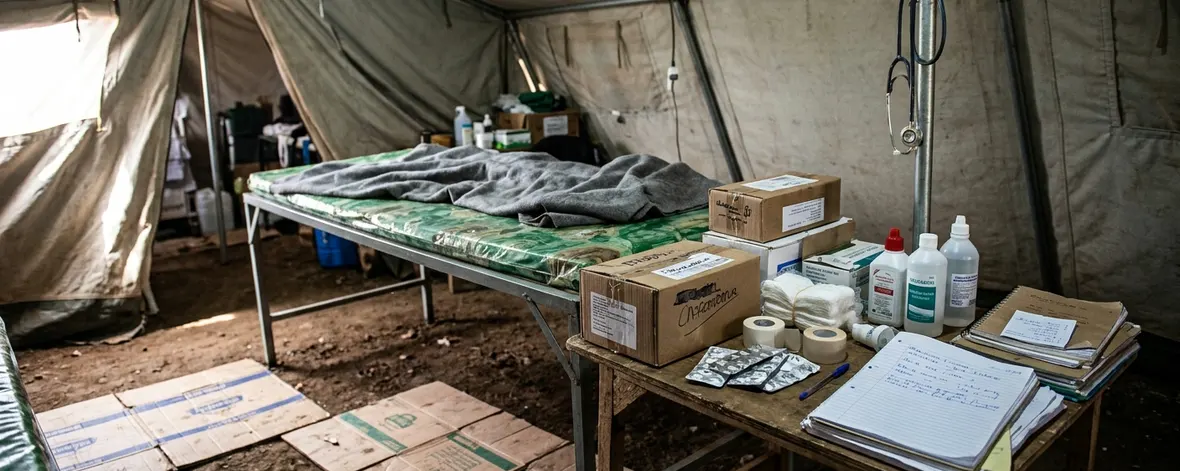
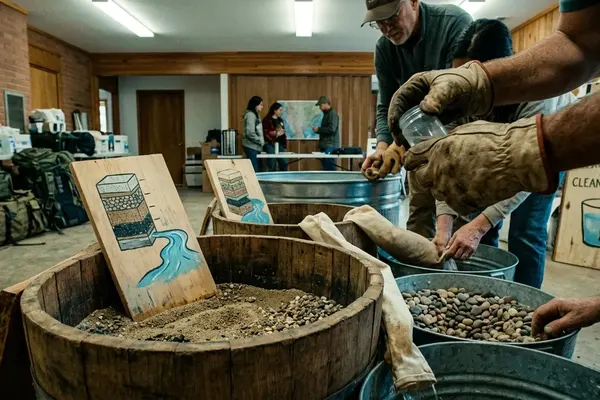
On-site treatment encompasses abstraction from a borehole, river, lake, reservoir, or existing network. The water moves through settling, filtration, disinfection, or packaged treatment units before entering storage tanks for distribution inside the camp. Treatment complexity depends entirely on the raw-water source.
Groundwater generally needs less treatment than turbid surface water. Flood-affected sources require careful monitoring and physical protection. Seasonal source changes altering raw-water turbidity can force sudden adjustments to the treatment sequence.
Engineers conduct hydrogeological surveys and raw-water turbidity tests to configure the appropriate sequence of settling, filtration, and disinfection skids. Highly turbid surface water often dictates flocculation and sedimentation phases requiring 12 to 24 hours of retention time. Powering this infrastructure demands generator sizing of 15kVA to 30kVA for standard submersible pumps.
Setup requirements extend beyond heavy equipment. A functional site needs intake protection, trained operators, spare parts, a secure chlorine stock, test kits, and safe access for maintenance.
Side-by-Side Comparison: Speed, Reliability, Cost Drivers, and Control
Operations managers conduct a comparative risk assessment, weighing the daily logistical vulnerability of road-bound tankers against the technical maintenance burden of on-site pumps and filters. Cost drivers differ fundamentally between the two models. Trucking costs are shaped by distance, fuel, contractor rates, road condition, loading delays, tanker capacity, and daily volume. On-site costs are shaped by equipment, installation, operators, power, chemicals, maintenance, and spare parts.
For example, energy requirements shift from per-kilometer diesel costs for heavy trucks to generator fuel consumption rates of around 8 to 12 liters per hour for on-site pumps.
| Decision Factor | Water Trucking Implication | On-Site Treatment Implication | Field Question to Ask |
|---|---|---|---|
| Startup Time | Rapid (hours to days) | Slower (weeks to months) | Can the population survive the installation delay? |
| Dependence on Roads | Critical daily vulnerability | Low (only for initial setup/spares) | Will monsoon season or conflict cut off access? |
| Water-Quality Control | High risk at transfer points | Centralized and verifiable | Can we supervise every tanker discharge? |
| Scalability | Linear (more water = more trucks) | Step-function (requires new pumps/tanks) | Is the camp population still growing rapidly? |
Water Quality and Public-Health Safeguards Cannot Be Deferred
Emergency speed does not remove the need for water-quality controls. Unsafe water delivery can amplify disease risk even when volumes appear adequate. Both options require protected source selection, clean storage, controlled chlorination, residual testing, turbidity observation, sanitary inspection, and complaint reporting.
Public health promoters and water technicians establish a daily surveillance routine, logging free residual chlorine levels at both the discharge point and the furthest tapstands. The goal is maintaining a free residual chlorine level of 0.2 to 0.5 mg/L at the point of use. This requires keeping testing reagents viable within a strict cold chain.
For water trucking, teams must emphasize tanker inspection and dedicated potable-water use. Hose hygiene and discharge supervision prevent cross-contamination. Sanitary inspections must also verify that distribution points maintain a safe distance from any VIP latrine or waste disposal trench. These protocols align directly with the Sphere Handbook’s WASH minimum standards.
Transition Triggers: When to Move Beyond Trucking
Trucking often starts as a bridge. It should not continue by default if a safer and more resilient supply can be developed. Qualitative transition triggers include repeated tanker delays, road insecurity, rising fuel pressure, and a growing population. The arrival of treatment equipment, trained operator availability, and sufficient storage capacity signal that a shift is possible.
Project managers execute a phased handover, maintaining a baseline fleet of tankers to supply vulnerable zones while the newly installed treatment plant and piped network undergo pressure testing. Monitoring reports show this requires a parallel commissioning period lasting roughly 7 to 14 days before fully decommissioning the trucking contracts.
Quick Tip: A practical transition checklist should include confirming the raw-water source, testing the treatment train, installing storage, verifying tapstand coverage, training operators, and communicating changes to residents.
Scope, Limitations, and Ethical Boundaries of the Comparison
Humanitarian coordinators define the intervention boundaries, explicitly separating emergency lifesaving water provision from long-term municipal utility development. This comparison focuses on emergency and early-recovery camp contexts. It does not address long-term refugee settlements with mature networks or household-level treatment programs.
One catch: the transition frameworks discussed here apply strictly to closed or semi-closed camp settings; dispersed urban displacement requires entirely different municipal network integration strategies.
While multi-year monitoring reports show these transition timelines hold true across most planned settlements, site-specific engineering decisions always require independent field assessment. This logic organizes the decision process but does not replace water-quality testing, hydrogeological review, public-health surveillance, or national regulatory requirements. Both options remain constrained by politics and protection risks, including access to sources, control of roads, community acceptance, and security around infrastructure.