Key Takeaways for VIP Latrine Planning
Summary: A VIP latrine is not just a pit with a superstructure. Its disease-control value depends on siting, ventilation, privacy, handwashing, desludging access, and daily management.
- First, reduce fecal contamination by separating excreta from people, water sources, food areas, drainage routes, and flies.
- Second, make the facility safe and acceptable to use, especially for women, children, older people, and people with limited mobility.
- Third, keep the latrine maintainable under camp conditions, with clear cleaning roles, repair materials, sludge monitoring, and safe access for emptying or closure.
Good VIP latrine planning starts before anyone marks a pit outline. Planners map contamination pathways, then test whether people will actually use the facility, and then check whether the camp can keep it functioning every day.
That order matters. A technically neat latrine block that sits in a flood pathway, lacks privacy, or cannot be cleaned becomes a public-health liability rather than a sanitation asset.
In practical terms, teams should compare three questions at every decision point: does this reduce fecal exposure, does this feel safe enough to use, and can the camp maintain it next week when tools, spare locks, soap, and staff time are limited?
What Makes a VIP Latrine Different
VIP means ventilated improved pit latrine. The design combines a pit, a stable slab, a superstructure, a vent pipe, a fly screen, and controlled light inside the cubicle. Each part has a job; none works well in isolation.
The pit contains feces. The slab creates a cleanable user interface and prevents direct contact with the pit. The superstructure gives privacy and blocks excess light. The vent pipe draws odor and flies away from the squat hole or seat, while the fly screen traps flies that move toward light at the top of the pipe.
For airflow, vent pipes commonly require a diameter of 110mm to 150mm. Fly screens need mesh in the 1.2mm to 1.5mm range so emerging flies cannot pass through without choking the updraft. A missing screen changes the risk profile sharply: a VIP latrine built with a correctly sized vent pipe but no fly screen can act as a fly-breeding outlet.
VIP latrines suit settings where water for flushing is limited. They do not remove the need for handwashing stations, soap, drainage, cleaning, or fecal-sludge planning.
Choose Sites Before Digging Pits
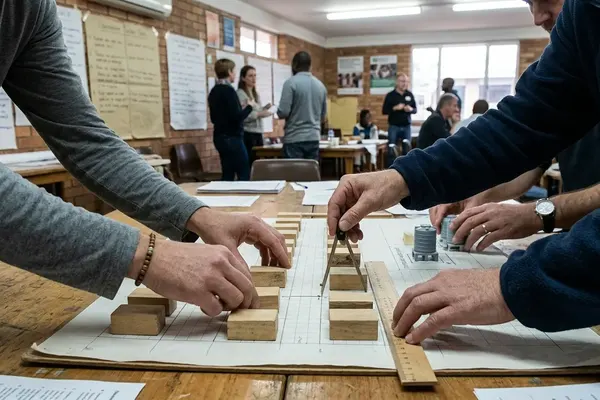
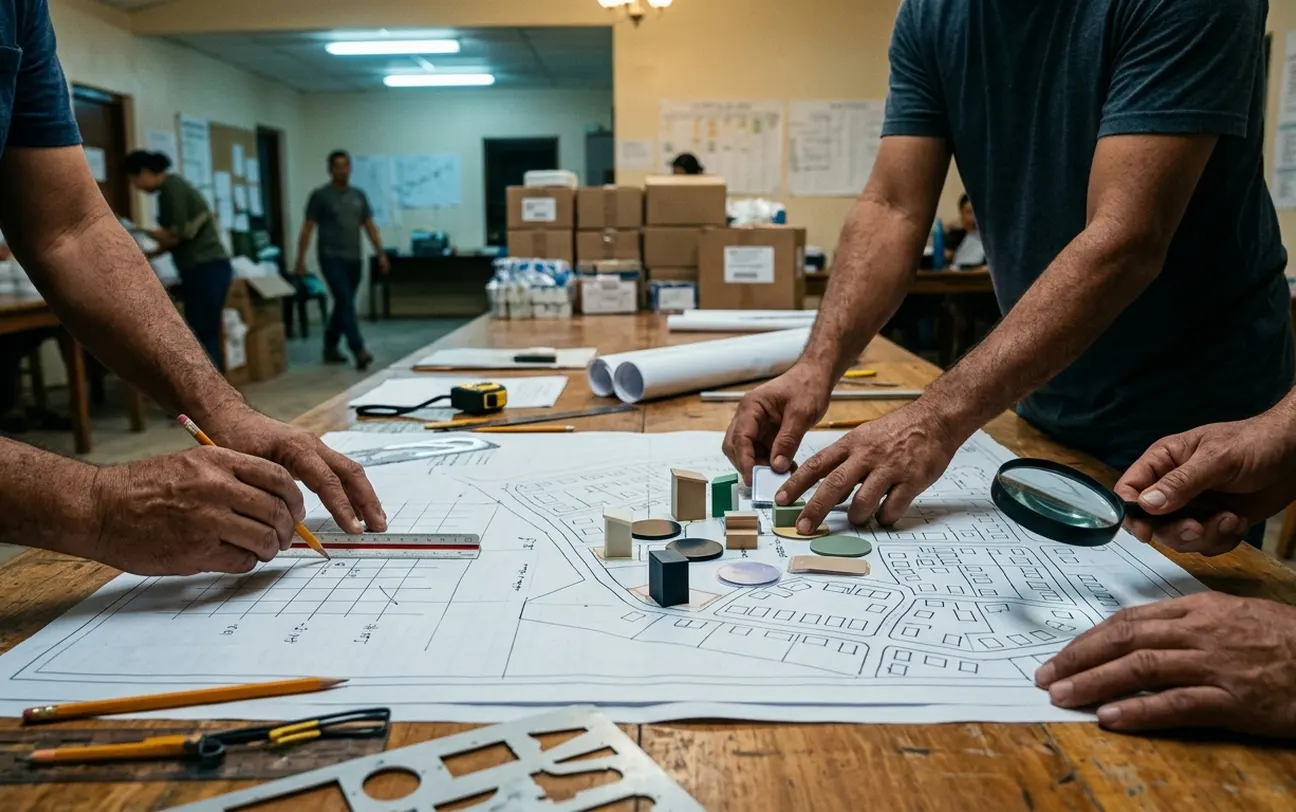
Site selection should begin with a joint walkthrough, not a drawing-room grid. WASH staff, camp management, protection actors, and community representatives need to read the same terrain together: groundwater depth, flood pathways, drainage lines, rocky ground, unstable soil, and walking routes from shelters.
One field team drafted a tidy row of blocks near the edge of a shelter zone. On the walk, residents pointed out that stormwater crossed that exact strip after heavy rain and that the nearest safe path at night bent around a cooking area. The revised layout looked less symmetrical on paper but reduced obvious contamination and protection risks.
Pits must sit at least 30 meters away from any groundwater source. Latrine blocks are typically placed 6 to 30 meters from the nearest shelters, balancing odor control with safe access. Distance alone does not settle the decision; a latrine that meets a spacing rule but sits downhill from a clinic drainage line still needs redesign.
Policy supports this integrated approach. UNHCR emergency WASH guidance on sanitation treats sanitation placement as part of public-health risk reduction, protection, and camp planning, not as a standalone construction task. The site-specific conclusion still depends on field assessment, soil conditions, and local authority requirements.
Size the Latrine Block Around Real Users
Planners should size and allocate latrine blocks from the population profile, not from a generic block template. Household size, sex and age distribution, disability access, unaccompanied children, pregnancy, illness, and mobility constraints all change how facilities work in practice.
Applicable minimums should be checked against current emergency standards and local authority requirements. This article does not replace those standards, and it should not be used to freeze ratios when the population changes.
Peak use needs special attention. Latrine demand commonly rises during the 05:30–07:30 and 17:00–19:00 windows, based on community follow-ups, so queuing space and path width matter as much as the number of doors. A block that functions at midday can become unsafe or unusable during morning and evening surges.
Allocation questions to answer before construction
- Should some units serve families rather than open communal use?
- Where are gender-separated blocks needed, and how will signs remain understandable for low-literacy users?
- Do children need smaller, supervised, or closer facilities?
- Where can people with limited mobility reach a latrine without crossing drainage channels or crowded distribution routes?
- How will menstrual hygiene needs be managed inside the block and at the waste-disposal point?
These are not soft questions. They determine whether the population uses the system or works around it.
Design for Privacy, Dignity, and Night Safety
Privacy is a sanitation outcome. When people avoid exposed or unsafe latrines, open defecation increases and fecal contamination spreads through paths, shelter edges, drainage channels, and children’s play areas.
Design teams should check door orientation, lockable doors, gender separation, screening from public view, menstrual hygiene space, and the approach path from shelters. A door facing a busy food distribution route may meet a construction specification and still fail users.
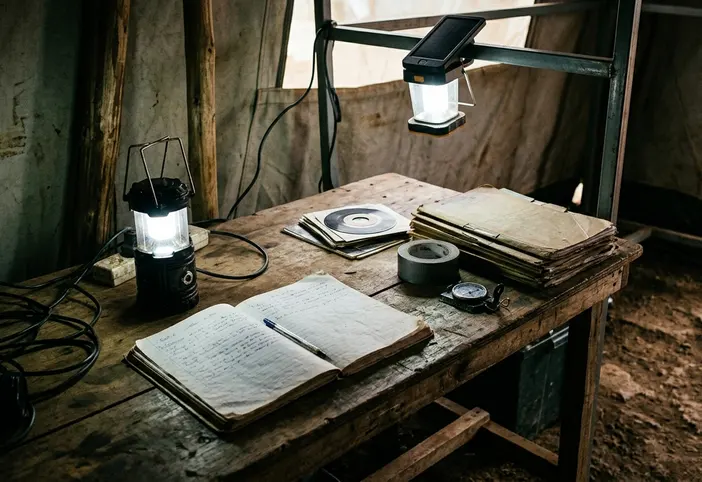
Lighting requires a careful compromise. The approach route needs enough visibility to reduce harassment and falls, while the interior must remain relatively dark for VIP fly-control performance. Solar street lights are commonly positioned 5 to 8 meters away from the latrine superstructure, with the beam angled toward the path rather than into the cubicle.
Note: A bright interior may feel reassuring at first inspection, but it can undermine the fly-control logic if flies move toward light inside the cubicle instead of toward the screened vent pipe.
Protection officers and WASH teams should settle these choices together. The same applies when latrine paths compete with water trucking lanes, food queues, clinic traffic, or cold chain movements for vaccination teams.
Keep Ventilation, Handwashing, and Cleaning Working Together
The disease-control logic is sequential: feces must be isolated, flies reduced, hand contamination interrupted, and surfaces kept usable. Ventilation helps with part of that chain, not all of it.
Vent pipe placement should favor steady airflow and direct light at the screened outlet. The fly screen must stay intact. The superstructure should remain dark enough for the fly-control mechanism. The slab needs to stay stable, washable, and free of cracks that collect fecal matter. Where lids form part of the local design, users need a clear routine for using them without blocking ventilation.
Handwashing must open with the latrine block, not arrive later. Communal latrine handwashing stations require a daily water allocation of 1.5 to 2.0 liters per expected user, with soap availability and drainage planned from the start.
Daily VIP Latrine Inspection Protocol
- Check vent pipe for blockages such as cobwebs, leaves, or debris.
- Verify the fly screen is intact at the top of the vent, with no tears larger than 1mm.
- Confirm the interior remains sufficiently dark when the door is closed.
Cleaning teams also need an escalation route. If a slab rocks, a lock breaks, a screen tears, or drainage pools beside the handwashing station, someone must have the authority and materials to fix it before users abandon the block.
Plan Construction So the Latrine Can Be Maintained
Construction choices should be judged by repairability as well as speed. Reinforced slabs or squatting plates may arrive from outside the camp for immediate hygiene control, while timber, roofing, doors, and screening materials may come from local supply chains if quality and protection risks can be managed.
Weak slabs, unstable pits, and poorly compacted edges create collapse and injury risks. In sandy or unstable soils, standard unlined VIP pits can collapse within weeks, which may require fully lined pits or raised sanitation structures regardless of how well the ventilation system is designed.
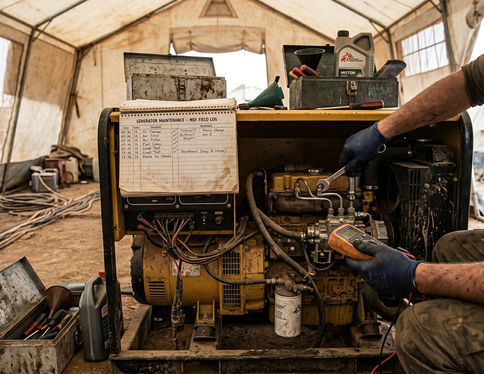
Maintenance logistics should be specified before handover. Cleaning teams need tools, PPE, water access, and a schedule. Storekeepers need spare locks, fly-screen material, hinges, cleaning supplies, and replacement pipe fittings. Supervisors need a sludge-level monitoring routine and a decision point for emptying, lining, replacement, or decommissioning.
Emergency pit lifespan calculations often use a sludge accumulation rate of 40 to 60 liters per person per year, depending on the use of bulky anal cleansing materials. That figure should inform access planning for emptying equipment and safe closure, not just the initial pit volume.
Quick Tip: If an emptying truck, manual desludging team, or decommissioning crew cannot reach the block safely, the latrine is not truly maintainable.
Scope and Limitations: When VIP Latrines Are Not Enough
VIP latrines do not fit every camp setting. High groundwater, frequent flooding, collapsing pits, limited land, and absent long-term desludging options can make the design unsafe or short-lived.
The sharpest constraint is groundwater protection. VIP latrines can become active public-health hazards where the seasonal water table rises to within 1.5 meters of the pit bottom, because unlined waste can contaminate the aquifer. Soil percolation checks and water table tests belong in the initial assessment, before procurement locks the camp into one design.
Acute outbreaks, dense urban displacement, environmentally sensitive sites, or camps on hardstand surfaces may require different systems: raised latrines, lined containment, container-based sanitation, or temporary options while engineers design a safer arrangement. Those alternatives may cost more and require tighter logistics, but they can reduce risks that a VIP pit cannot solve.
This article provides a planning framework. It is not a substitute for site-specific engineering design, public-health assessment, community consultation, or local regulatory approval.