Key Takeaways: What Each Shelter Option Is Best For
Family tents deliver rapid habitable space when nothing else stands. Plastic sheeting supplies flexible emergency coverage and quick repairs. Transitional shelter supports longer occupation once conditions stabilize.
No single choice wins everywhere. Climate, how long displacement lasts, land rights, available materials, transport limits, and what a household can keep up all shape the fit.
Choose by the failure mode you expect, not just by how fast the first items reach the ground.
The Decision Frame: Speed, Protection, Adaptability, and Exit Path
Four tests guide every comparison. How fast can teams get shelter up? How well does it shield against wind, rain, heat, or cold? Can households adjust it to their own needs? And what comes after—upgrade, move, or return?
Shelter works as a system, not a lone product. Drainage, anchoring, privacy, airflow, buying, storing, moving, and upkeep all tie together.
The lens stays operational. Aid teams, site planners, and trainers weigh these factors before locking in a modality.
Family Tents: Rapid Habitable Space With Predictable Limits
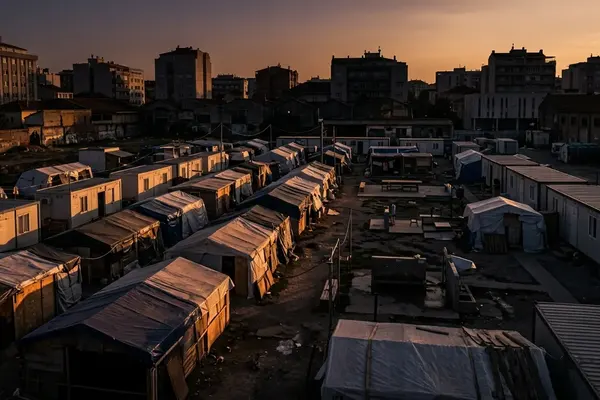
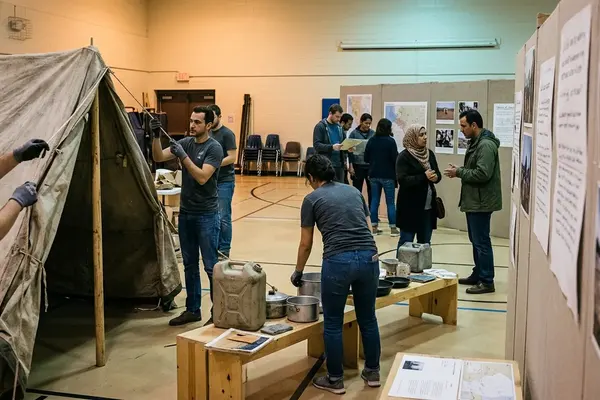
Standard family tents give immediate covered living space the moment households lack any safe structure.
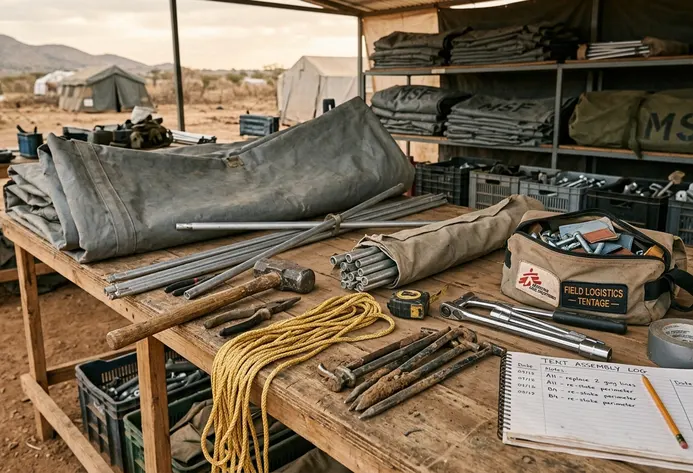
They arrive recognizable, set up quickly, mark out clear interior room, and match centralized distribution runs. Acute influxes often rely on them.
Fabric wears under sun and wind. Heat and cold performance varies. Anchoring demands attention. Crowding builds pressure. Adaptability stays low. The real risk appears when teams treat tents as medium-term housing without planning the next step.
Plastic Sheeting: Flexible Emergency Coverage, Not a Complete Shelter by Itself
Humanitarian-grade plastic sheeting comes in roughly 4 by 5 meter sheets made from woven high-density polyethylene weighing about 190 to 200 grams per square meter. Teams use it for roofing, walls, partitions, repairs, ground cover, and weatherproofing damaged buildings.
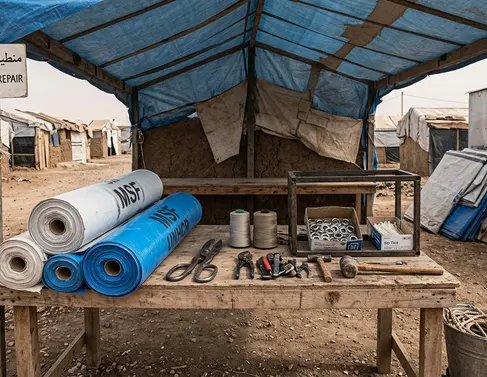
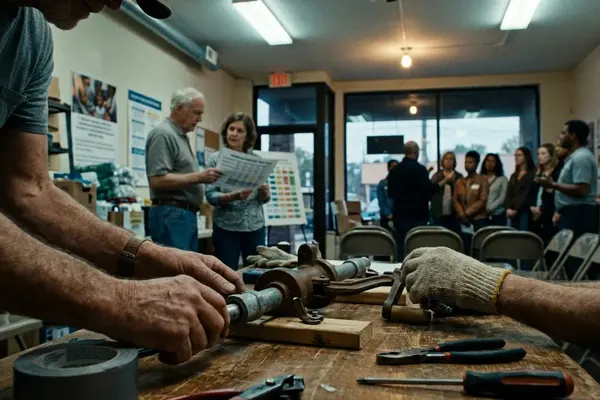
Its strength lies in pairing with local timber, rope, poles, salvaged frames, or existing structures. That flexibility crosses many settlement types.
Sheeting by itself leaves structural safety, thermal comfort, privacy, drainage, and fire risk unsolved. Installation quality and the support materials decide real protection levels.
Transitional Shelter: Stronger Continuity When Displacement Is Prolonged
Transitional shelter bridges emergency response and more durable arrangements. Frames often allow upgrades, draw on local materials, and involve household labor.
Durability improves. Climate adaptation gains ground. Incremental upgrades become possible. The approach fits better when displacement stretches past the first emergency weeks.
Rollout slows. Dependence grows on land access, local markets, construction skills, community acceptance, and coordination with authorities.
Side-by-Side Operational Comparison
Deployment speed, logistics burden, durability, privacy, repairability, climate performance, household agency, site requirements, and exit strategy all shift across the three options.
Family tents usually lead where speed and standardized distribution matter most. Plastic sheeting leads where flexibility and repair sit at the center. Transitional shelter leads where continuity and upgrading look feasible.
Ratings stay qualitative—high, moderate, limited, or context-dependent, because local conditions override blanket scores.
Shelter Choices Affect Site Planning and Public Health
Shelter type shapes camp layout, access roads, drainage channels, WASH facilities, cooking areas, fire separation, lighting, and protection risks.
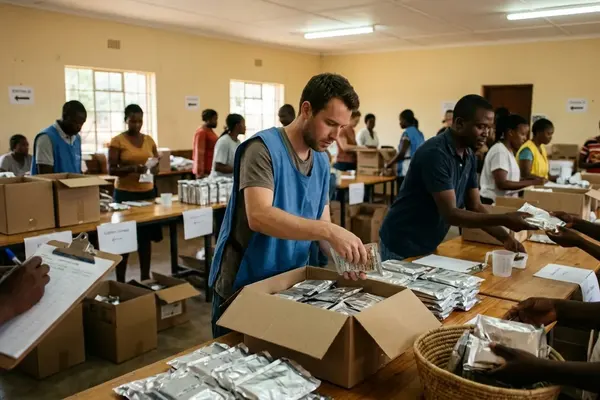
Logistics connect directly to response. Tents need storage volume and transport planning. Sheeting needs compatible fixings and support materials. Transitional shelter needs supply chains, technical supervision, and community labor planning.
Public-health outcomes depend on ventilation, ground conditions, crowding, and drainage. Shortfalls here can undercut any shelter choice.
Scope, Standards, and Limits of This Comparison
This article does not prescribe one universal shelter package. It does not replace technical assessment by shelter, WASH, protection, logistics, or public-health teams.
Conflict dynamics, host-government policy, land tenure, local building codes, cultural preferences, disability access, seasonal weather, procurement restrictions, and household composition can all shift the right choice.
Teams align choices with minimum humanitarian expectations set out in the Sphere Handbook shelter and settlement standards. In some settings, host-government rules make transitional frames legally unviable if they imply permanent settlement or forbid foundations deeper than about 30 centimeters.