Key Takeaways for Rapid Shelter Spacing Decisions
Shelter spacing shapes health outcomes, logistics flow, and room for growth. It is never just a housing grid.
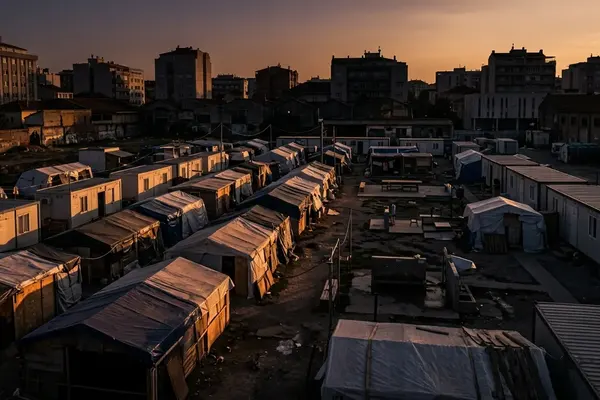
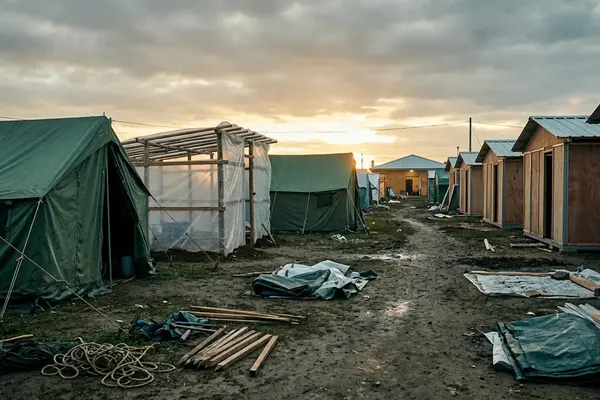
Poorly planned emergency settlements turn pathogenic when overcrowding meets bad drainage, blocked sanitation routes, and uncontrolled movement. The first week decides everything. Layout and basic infrastructure must start before patterns lock in.
Why Shelter Spacing Is a Public-Health Control
Dense, improvised placement limits ventilation and blocks drainage. It also cuts off sanitation access and slows emergency teams. Health logisticians calculate separation using vector flight ranges and fire models so one outbreak or blaze stays local.
MSF-style priorities treat water, sanitation, shelter, and clinical response as one system. Spacing sits at the center of that system.
Step 1: Identify Whether the Crisis Is a Camp or an Open Situation
Planned camps let teams set plot layout, service points, and corridors from day one. Open situations scatter people across rural or urban land, so spacing work means mapping clusters and clearing access without a single boundary.
Transect walks help here. They reveal high-risk pockets that rigid grids would miss.
Step 2: Put Site Planning Under Technical Supervision
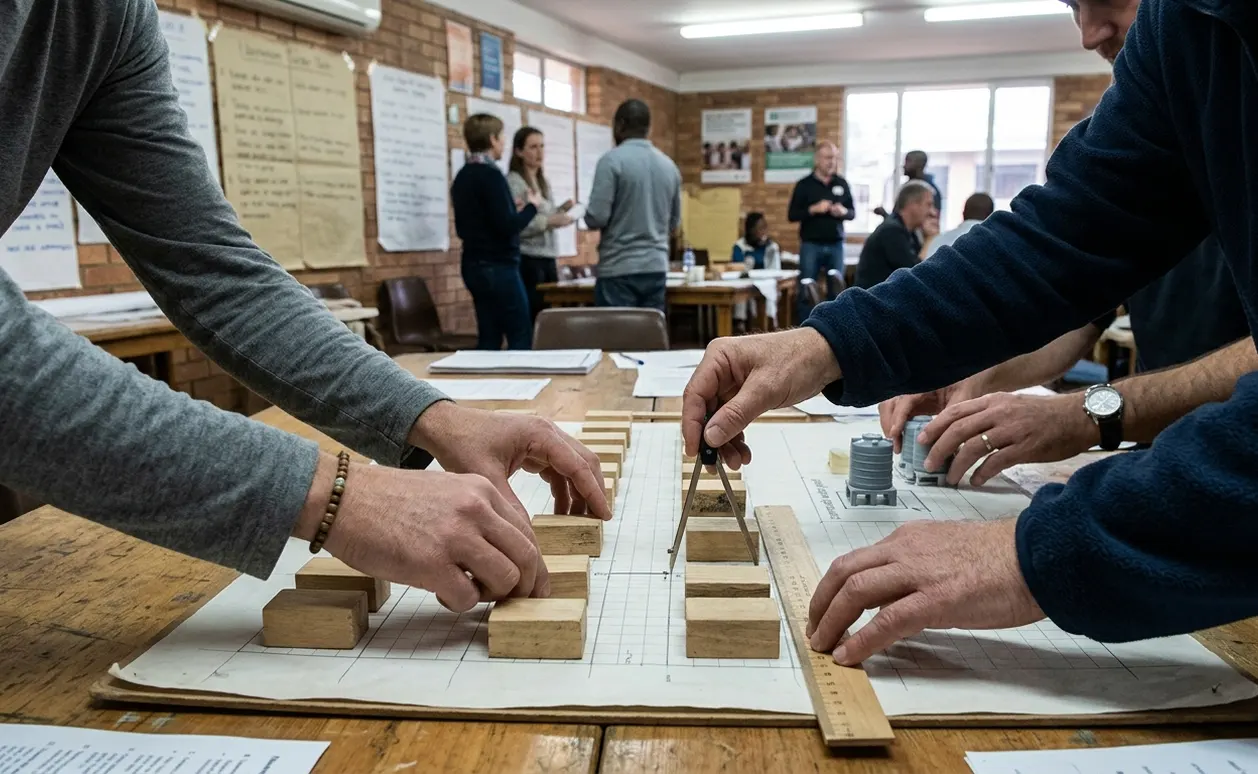
Site planning needs sanitation engineers and geologists. Soil percolation, water table depth, slope, and road access all decide where plots can safely sit. UNHCR leads overall refugee site work while other actors add sector expertise. MSF supplies health guidance rather than layout authority.
Step 3: Establish Minimum Shelter Spacing Before the Layout Hardens
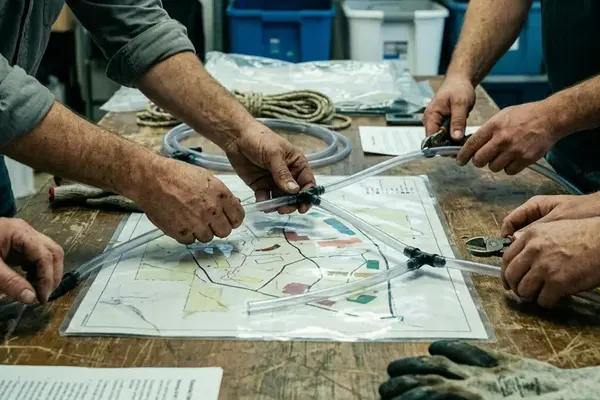
Mark rows with stakes and rope. Leave corridors open. Keep drainage paths clear. Field teams tie knots at set intervals on pre-measured lines so plots and roads appear fast.
Spacing must cover privacy, fire gaps, ventilation, vectors, and service teams.

Step 4: Reserve Space for Lateral Expansion
New arrivals keep coming. Reserve outer zones early by staking ground and securing land agreements. This prevents later crowding that collapses roads and sanitation.
Field Warning: What the 1994 Goma Crisis Shows
The 1994 influx at the Zaire border hit volcanic rock that stopped normal latrine digging. Responders shifted to surface waste systems while thousands arrived each hour. The lesson is simple: shelter placement, sanitation, water, and health capacity must begin at once when numbers surge.
Scope and Limitations of Spacing Guidance
These principles do not replace current operational standards, local land checks, protection analysis, or engineering calls. Numeric targets shift with context and must match live UNHCR guidance and field coordination.
First-Week Shelter Spacing Operations
Daily perimeter walks catch overnight blocks on access roads or drainage lines. The work stays practical: identify settlement type in the first day, assign technical oversight, and mark main routes before self-settlement spreads.
- Identify settlement type (planned camp vs. open/dispersed situation) within the first day.
- Assign technical site supervision to personnel with sanitation and geological expertise.
- Mark roughly 15-meter main access routes and stake expansion zones before land fills.