Key Takeaways for Designing a Displacement Exhibit
The curation team initially debated using virtual reality headsets to simulate camp entry, but rejected this approach because it isolated visitors and prioritized technological novelty over the shared physical experience.
A public exhibit can evoke displacement conditions, but it must not claim to reproduce refugee experience. Spatial compression, queues, uncertainty, material scarcity, administrative processes, and guided interpretation stand out as the strongest tools.
Flag the main ethical risks early: voyeurism, trauma spectacle, false equivalence, visitor fatigue, and overconfidence in simplified camp narratives.
Define the Boundary: Evocation, Not Reenactment
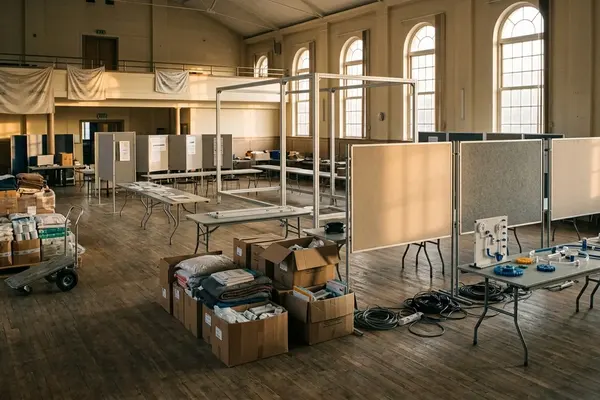
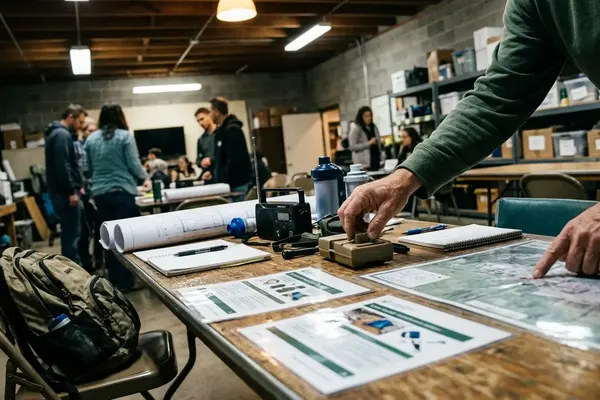
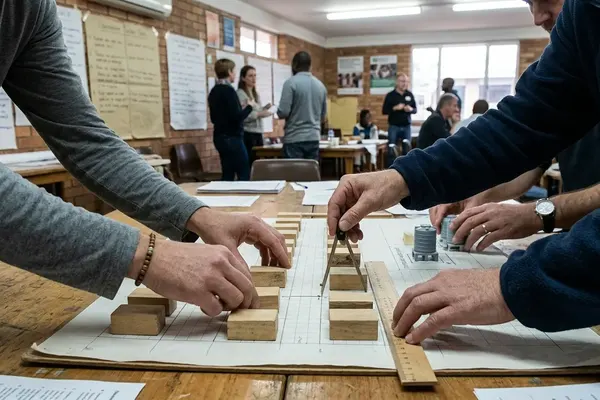
Designers established the evocation boundary by mapping out physical constraints and translating those dimensions into the floor plan without attempting to simulate the psychological weight of statelessness. The exhibit should recreate selected conditions of displacement—movement restriction, waiting, rationing, administrative uncertainty, and loss of privacy, without pretending visitors can experience forced migration itself.
Fear of violence, legal precarity, family separation, statelessness, and long-term psychological distress cannot be ethically simulated for a museum audience. Standards from organizations such as Sphere humanitarian standards can inform minimum-service themes, but they do not make a public exhibit equivalent to field reality. Spatial compression techniques lose their educational value if the exhibit space exceeds roughly 500 square meters, as the intended feeling of administrative crowding dissipates in overly cavernous museum halls.
Build the Visitor Route Around Decisions, Queues, and Loss of Control
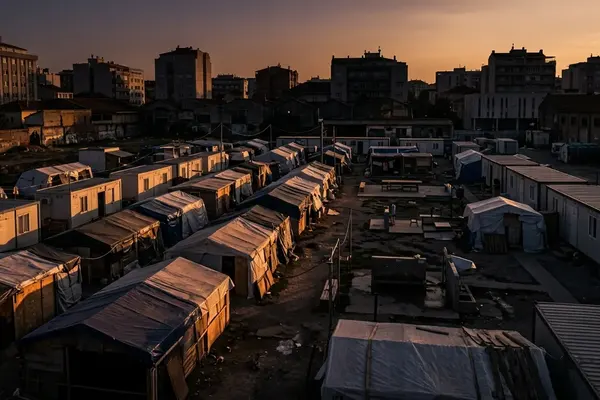
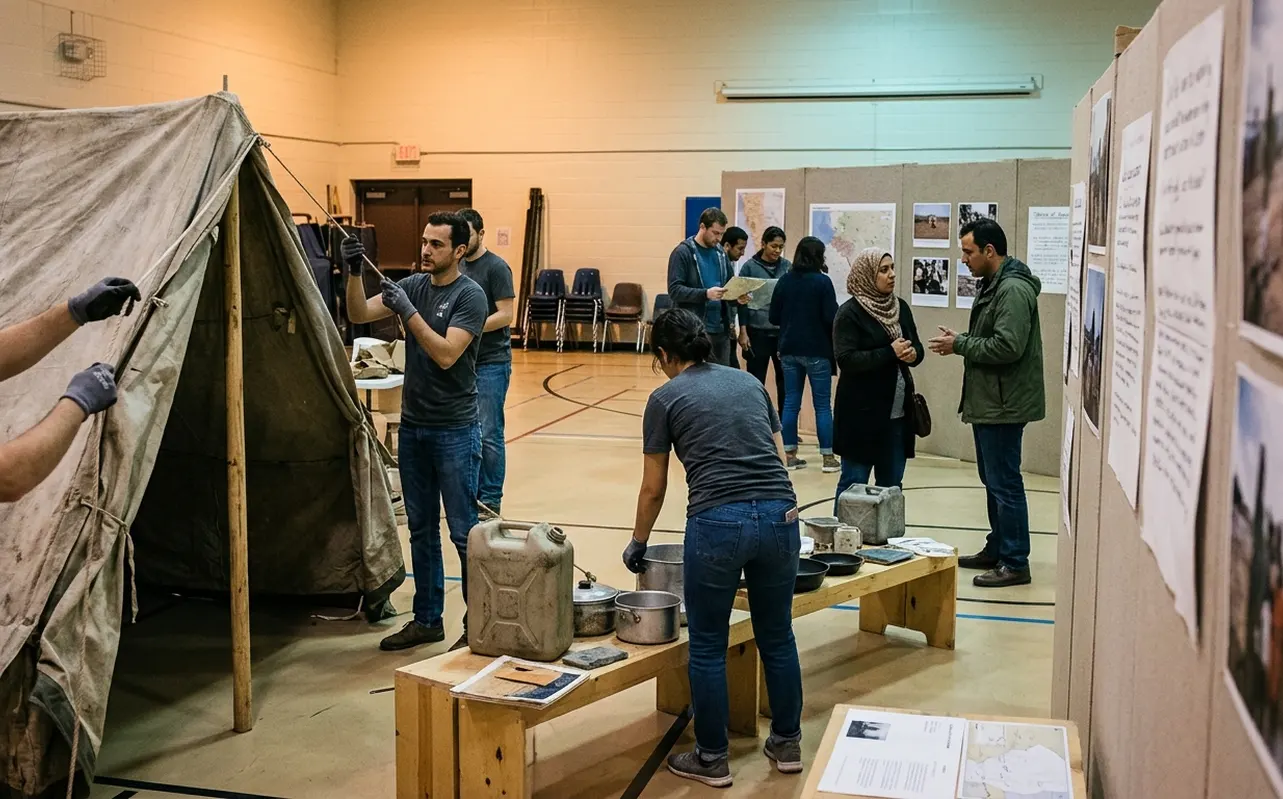
The routing committee structured the pathway to force bottlenecks at registration desks, deliberately separating groups to mimic administrative processing delays before funneling them into a standardized shelter zone. The exhibit works best as a sequence rather than a room: arrival, registration, temporary shelter, water access, sanitation, health referral, information uncertainty, and exit/debrief.
Controlled movement communicates displacement without theatrical coercion through narrow walkways, waiting points, delayed instructions, interrupted sightlines, and limited seating. Queues serve as an interpretive device, not a gimmick; each one explains what is being waited for and why delays occur in emergency response settings. The roughly 1.2-meter-wide taped corridor created delays of about 4 to 7 minutes at the mock registration desk.
Use Camp Logistics as the Exhibit’s Evidence Layer
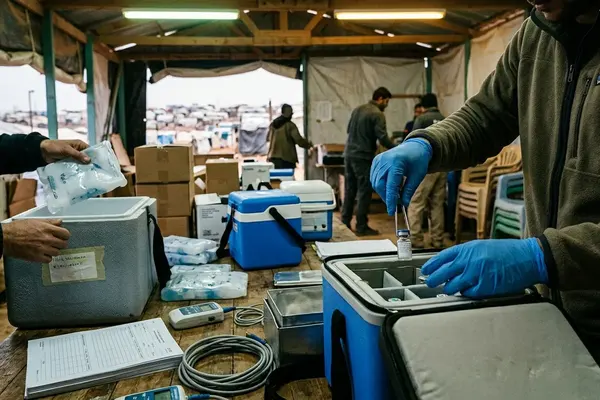
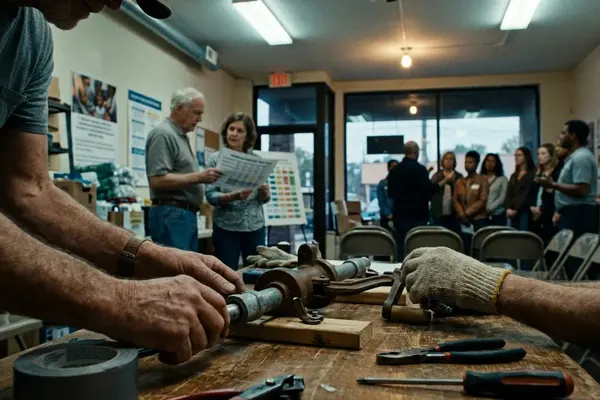
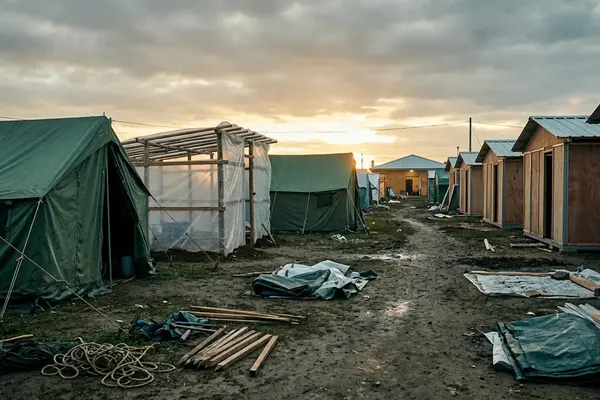
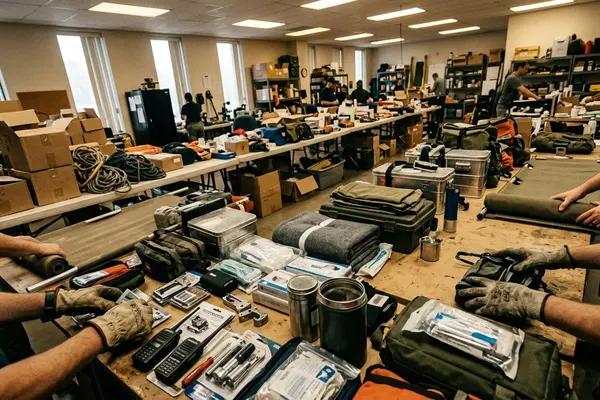
Curators sourced authentic collapsible water containers and standard-issue thermal blankets, placing them on low wooden pallets to demonstrate supply chain realities rather than hanging them as dramatic props. Objects function as evidence of humanitarian systems: jerry cans indicate water collection burdens, blankets indicate emergency non-food-item distribution, and tarpaulins indicate temporary shelter strategies.
MSF-style field logistics appear through supply chains, triage pathways, cold-chain constraints, mobile clinics, and sanitation planning without claiming direct operational endorsement. Every object needs an explanatory role connected to shelter, water, sanitation, protection, health, food distribution, or communications. The 15-liter collapsible water containers and standard 1.5 x 2 meter thermal blankets made those connections concrete.
Put Testimony Under Consent and Editorial Control
First-person testimony should not serve as emotional decoration; it must carry documented consent, contextual framing, and clear editorial limits. A layered approach works well: short quotations, audio stations, transcript excerpts, maps of movement, and curator notes explaining what has been omitted for safety or dignity.
Protect narrators by avoiding unnecessary names, exact routes, recognizable family details, asylum-status information, or images that could create risk. The editorial board implemented a layered audio strategy, selecting short voice clips from displaced individuals that focus strictly on logistical hurdles, actively filtering out graphic trauma descriptions. The roughly 45- to 90-second voice clips kept the focus on process rather than spectacle.
Facilitate the Visit: Briefing, Debriefing, and Accessible Routes
Plan the exhibit as a facilitated learning environment, especially for school groups, journalism students, public-health trainees, and general visitors encountering the topic for the first time. A short entrance briefing explains intensity, opt-out routes, photography rules, and the difference between simulation and interpretation.
Include a debrief zone with seating, quiet lighting, educator prompts, and factual next-step materials so visitors do not leave with shock as the only outcome. Facilitators designed the debriefing zone to contrast sharply with the exhibit interior, utilizing warm lighting and circular seating arrangements to physically and psychologically transition visitors back to the present. The 3000K warm lighting and roughly 15-minute mandatory buffer period for school groups proved essential.
Evaluate Learning Without Turning Suffering Into Metrics
Educational impact should be evaluated through careful, dated, local evidence rather than inflated claims about changing public opinion. Qualitative tools include visitor questions, educator reflections, post-visit discussion notes, accessibility feedback, and documented misconceptions corrected during tours.
The evaluation team shifted from standardized exit surveys to observational tracking, logging the frequency and type of questions asked by visitors at the mock sanitation stations to gauge systemic understanding. Avoid unsupported statistics such as percentage increases in empathy, awareness, or willingness to act unless tied to a named, verifiable study or exhibit evaluation.
Preserve the Exhibit’s Afterlife as an Educational Archive
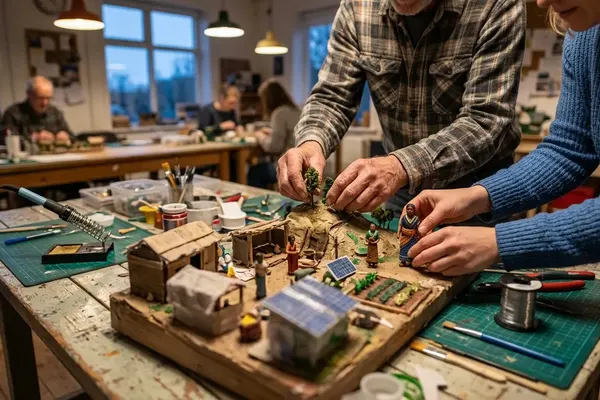
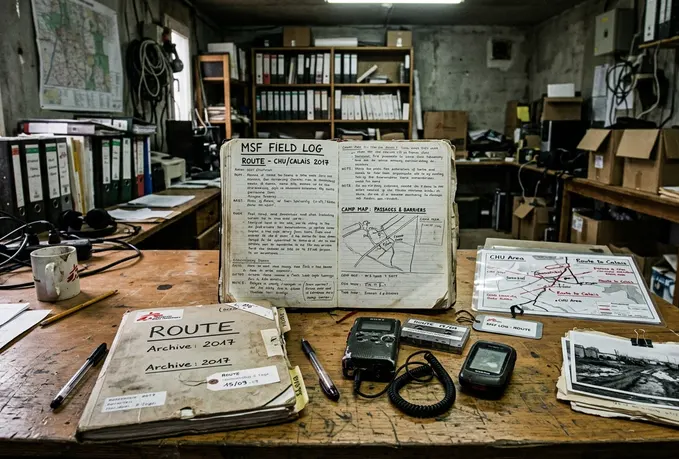
The exhibit is not only an immersive public installation, but also an archive of decisions about ethics, logistics, standards, and representation. Archivists cataloged the exhibit's physical footprint by digitizing the CAD floor plans alongside the educator prompt cards, ensuring future public-health trainees could study the spatial relationship between intended interpretation and actual visitor movement.
Preserve floor plans, object lists, curator notes, consent records, educator guides, debrief prompts, and installation photographs for future teaching use. An exhibit archive helps students and practitioners compare intended interpretation with actual visitor movement and questions.