In this Article
- When Easy Answers Invent a Different Camp
- Recording the Question Before the Rewrite
- Matching Public Curiosity to Camp Work
- Field Systems a Display Cannot Hold
- Four Layers from a Single Water Question
- The Check That Happens After the Draft Feels Finished
When Easy Answers Invent a Different Camp
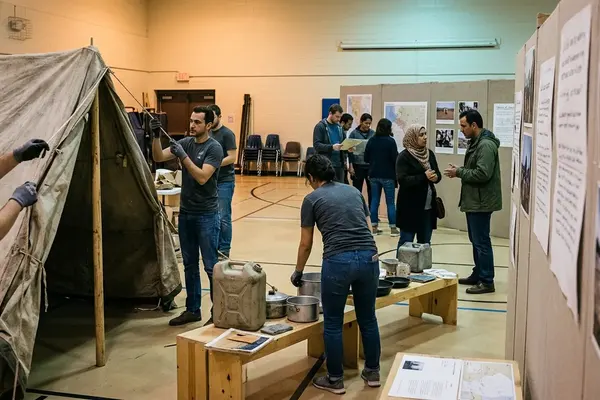
I still hear the visitor who asked whether the tents on the floor were the houses people actually receive. The question was generous. The answer I almost gave would have flattened site planning into a yes or no.
A simplified reply can send someone out of a refugee camp exhibit with a picture of emergency operations that the field would not recognize. That is the stake I write against.
Preserve the original question. Name the technical issue under it. Check the answer against field context. Say what the exhibit cannot show. Then test whether the material helps people learn. I treat that order as the whole method.
Recurring questions are evidence. They mark confusion, curiosity, or a missing piece of interpretation at a station. They tell me where the objects on the floor have outrun the labels beside them.
I refuse to turn that evidence into a league table. Frequency stays qualitative unless dated tour records preserve reliable counts. A vivid question is still one question.
Uncounted Tour Questions
If the cards and the debrief matrix do not carry a date, I leave the question unranked. Memory makes the striking inquiry feel typical. The record does not.
Recording the Question Before the Rewrite
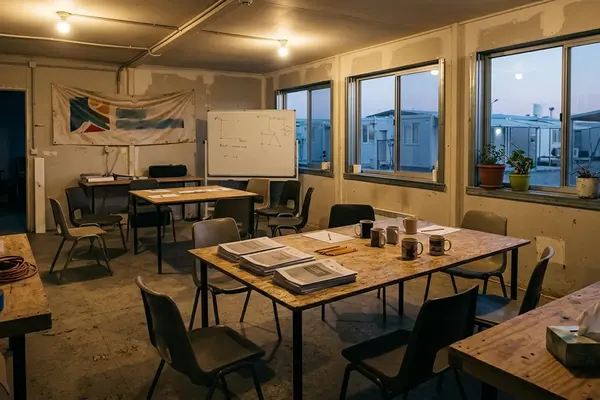
I start collection while the tour is still warm. Guides keep brief notes at the station. Visitors can drop a thought on a standardized 3x5 inch anonymous question card. We close with a short post-tour debrief window, just under fifteen minutes, and fill a lightweight matrix: date, exhibit station, and whatever visitor context we actually have.
The team once considered recording tour audio so the phrasing would be exact. Visitor privacy and the administrative weight of transcription closed that door. The matrix after the last goodbye is enough if we complete it immediately.
I keep the visitor's wording on its own line. My interpretation sits beside it, never on top of it. Uncertainty, borrowed assumptions, and unfamiliar vocabulary have to stay visible. If someone says "bathroom hut" in front of a VIP latrine, that phrasing is the teaching problem. Cleaning it up too early hides the gap.
Personal details come off the card before anyone else reads it. I also resist the temptation to treat one memorable question as the voice of every school group, planner, or family that walked the same route.
Keep Visitor Syntax
Copy the sentence as spoken. Put the curator's gloss in a second field. If those two lines collapse into one, the later resource will answer a question nobody asked.
Matching Public Curiosity to Camp Work
Once the wording is safe, I sort by the operational concept underneath. Shelter. Water and sanitation. Clinical care. Supply movement. Registration. Security. Coordination. A question that sounds like hardware often belongs to one of those systems.
When I compare a school group's water question with a municipal planner's question at the same tap stand, the objects match and the learning goals do not. One visitor wants a sequence. The other wants to know who decides rationing when the yield drops.
Factual, ethical, and systems questions need different rooms
Factual questions can take a short, sourced explanation tied to a visible object. Ethical questions need time, competing duties, and space for disagreement. Comparative questions ask how one camp differs from another and collapse if I offer a single layout as the pattern. Systems questions reach past the object toward agencies, phases, and constraints.
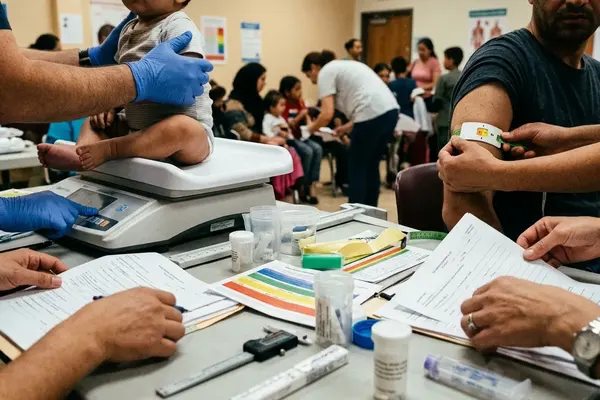
Clinical-care curiosity often stops at the clinic tent and never reaches the cold chain that keeps vaccines usable. Sanitation curiosity tends to stop at the superstructure of a VIP latrine and never reaches siting, fly control, or desludging. Those are the systemic misunderstandings I prioritize over a simple request for a number.
Each question has to serve a learning goal. A miscellaneous list of frequently asked questions is a filing cabinet. I want a teaching package that a guide or a classroom can actually run.
Field Systems a Display Cannot Hold
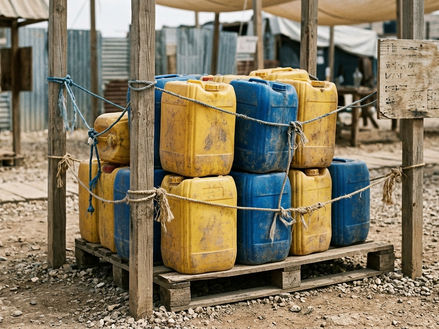
A static object conceals the work around it. A jerrycan on a plinth invites a visitor to ask about water, and the honest answer runs through sourcing, treatment, storage, distribution, maintenance, and access. The container itself, with its 20-liter standard capacity for emergency water, is only the last handheld piece of that chain.
I separate what a visitor can see from the explanation I add later. The tap stand is observable. An aquifer, a tanker schedule, a treatment step, and the queue rules are not. Reviewers walk the exhibit, list those invisible supports, and cross-reference field manuals so the extra layer stays tied to practice rather than to gallery habit.
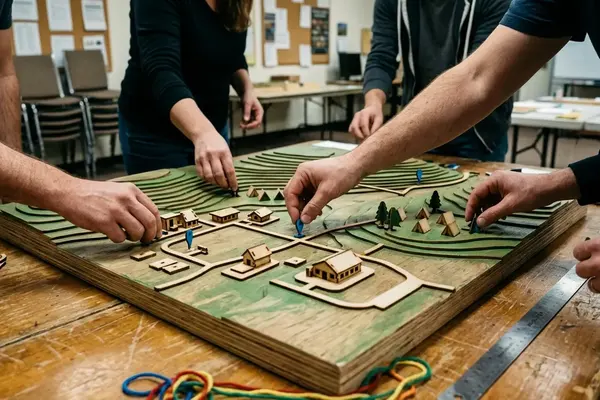
Operational descriptions need a phase and a setting. The initial emergency phase can run from 72 hours to 4 weeks, and the choices available in that window differ from those in a planned site with more infrastructure. Population needs change. Responsible agencies change. One camp layout or one logistics sequence cannot stand in for the rest.
This contextual layering belongs in guided educational settings. Unguided public floors need standalone placards, and those placards cannot carry multi-phase operational caveats without turning into a manual nobody reads.
Name the Missing System
If the object on the floor cannot show sourcing, maintenance, or access, say so in the teaching note. Silence around those gaps is how a display becomes a substitute for the camp.
Four Layers from a Single Water Question
Take the illustrative visitor question, "How does clean water reach people in a camp?" I am not calling it the most common question. I am using it because it opens a system.
I build the resource in layers, and I keep each layer short enough to speak aloud at the station.
A direct answer, then the words that carry it
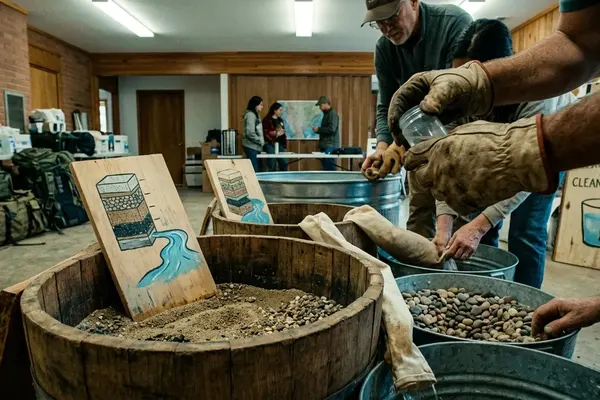
First, a direct answer: water is sourced, treated if required, stored, and distributed to people through a planned network of points, and the planning target many educators will meet in guidance is a minimum standard of 15 to 20 liters of water per person per day. Then I define the terms the answer leaned on. WASH. Source. Treatment. Storage. Distribution. Access. Without those definitions, the sequence sounds smoother than the work is.
The sequence visitors cannot walk
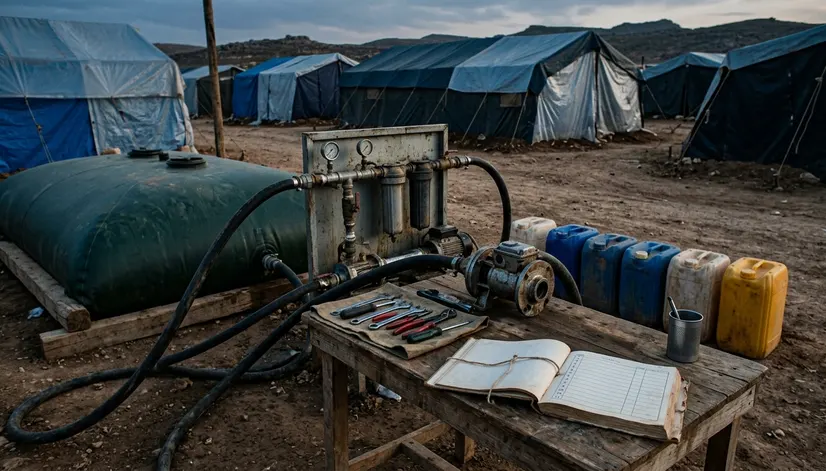
Next comes the source-to-distribution path: where the water might come from, who tests it, how it moves, where it waits, and how people reach a tap. I tie every spoken step I can to the water container or tap stand in the room. I also say which parts of the wider system are absent from the display. The exhibit can hold a tap. It cannot hold an aquifer, a tanker fleet, or a night-time security problem at the collection point.
Last, I add prompts. Who waits longest at the tap when pressure falls? Who repairs a broken fitting, and with what spare parts? What changes between the first 72 hours and the later weeks, when a temporary trucking arrangement may give way to a more stable source? Those prompts keep the package alive after the guide has left the station.
In the post-tour debrief matrix for WASH inquiries, I logged that water questions cluster around how the tap is fed rather than around the chemistry of treatment. That single first-person note is why the package spends more time on movement and access than on treatment steps the exhibit cannot show.
The Check That Happens After the Draft Feels Finished
Before a resource leaves the exhibit, I run a last editorial pass. Does it still answer the visitor's question? Is the technical content accurate for the phase it claims? Does the language stay plain? Can a reader see where the uncertainty sits? Could a classroom or a guided tour actually use it?
Where we can, a final editorial panel tries the draft with a pilot group of students. We record what they misunderstand. Warm reactions are welcome and they are a poor substitute for accuracy. Friction is the useful finding.
Revision dates and reviewer roles stay on the document. Educators deserve to see how current the field notes are and how far the scope was meant to run. A teaching package without that frame ages in silence.
If the next school group stops at the tap stand and asks how clean water reaches people in a camp, will you teach from the object they can touch, or from the source-to-distribution path the floor cannot hold?